
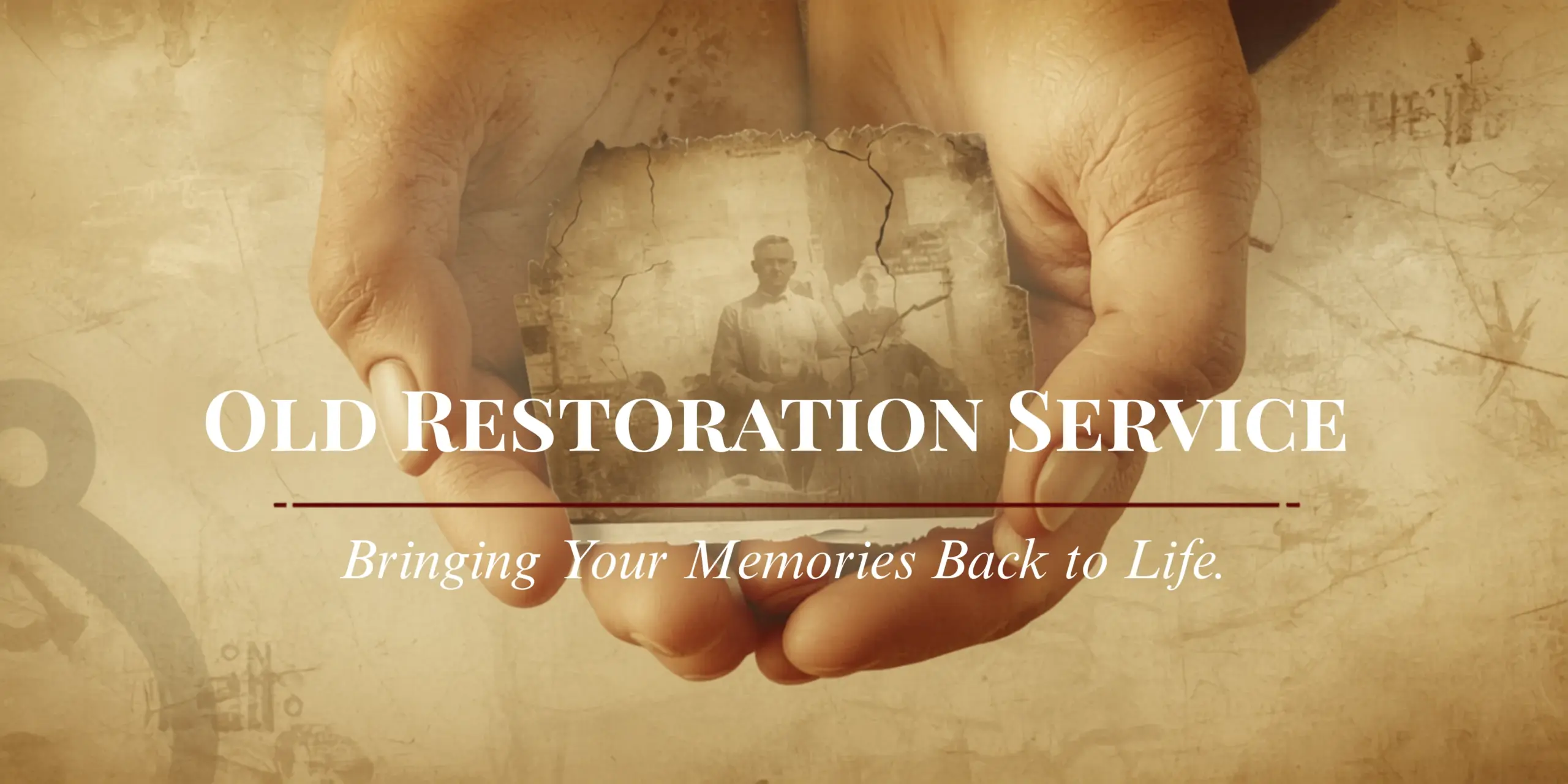
There is more to old photos than just pictures. They are priceless documents of individuals, locations, and times that are no longer as they once were. A water-stained family photo from a flood-damaged cellar, a faded wedding photograph from the 1940s, or a cracked school shot from the 1960s all have significant sentimental and historical value. As those pictures decay, the memories they contain also seem to be disappearing.
That’s precisely why there are services for restoring vintage photos. Experts like the staff at Photodotedit have dedicated years to perfecting the technological art of fixing, reconstructing, and resurrecting images that most people believe cannot be saved. With over 18 years of experience in the field and clients across the UK, US, Europe, and Australia, Photodotedit handles everything from light scratch removal to extreme damage restoration, starting at just a few dollars per image.
Everything you need to know about professional picture restoration is covered in this guide, including what types of damage can be fixed, how it differs from AI tools, and what to anticipate in terms of cost and turnaround time.
What Is Photo Restoration?
The process of fixing and improving old or damaged photos to restore their original appearance—or, in certain situations, to make them look better than they ever did—is known as photo restoration. It is completed digitally with the aid of specialized editing programs like Adobe Photoshop and calls for both technical proficiency and creative judgment.
Restoration addresses structural damage to the image itself, in contrast to simple photo manipulation. The objective is to restore detail that has been lost due to time, environmental damage, or incorrect storage, rather than merely making a picture appear good.
From fixing a few minor scratches to reconstructing entire missing portions of a picture, restoration can take many different forms. The degree of damage and the amount of the original image that can still be read and used as a reference determine the degree of intervention.
Families conserving generational memories, genealogical researchers reconstructing historical records, historians archiving cultural documents, and others who just wish to preserve a priceless photo of a loved one all employ photo restoration services.
Types of Damage Professionals Repair
Setting reasonable expectations for what can be restored and how is made easier when one is aware of the types of damage that vintage photos can sustain.
Fading and Color Loss
Age, humidity, and light exposure cause the chemical pigments and dyes in photos to degrade over time. As a result, the image is either washed out, with colors shifting to orange or yellow, or the contrast is so low that it is hardly readable. This is fixed by experts using specific tone changes, contrast restoration, and meticulous color grading.
Cracks and Creases
As photographic paper ages, it becomes fragile. Cracks and severe wrinkles that cut across the image in visible lines are caused by folding, bending, or incorrect storing. Cloning and healing tools, which sample adjacent pixels and fill in the damaged lines without altering the surrounding texture, are used to fix them.
Water Damage
Water causes discoloration, blank areas, and occasionally warping that ruins whole portions of a picture. Because the damage is sometimes uneven and simultaneously affects color and structural detail, water-damaged images are among the most difficult to recover.
Mold and Mildew
On photos kept in moist environments, mold grows and causes spots, stains, and blotchy discolouration. Expert restorers remove mold damage and restore the detail underlying by adjusting hue, white balance, saturation, and contrast.
Tears and Missing Pieces
Because parts of the image are physically missing, torn photos pose a special problem. In order to digitally reconstruct the image, restorers must use sophisticated Photoshop techniques, context from nearby locations, and reference information of what the scene probably comprised.
Stains, Scratches, and Blemishes
Scratches, ink stains, and other surface-level damage can be anything from small annoyances to significant roadblocks. Healing brushes, clone stamps, and frequency separation are used to eliminate the damage while maintaining the underlying image texture, depending on how severe it is.
Silverfish and Glue Damage
Photographs’ emulsion layer is eaten by silverfish insects. In addition to causing long-lasting chemical damage, album glue is used to mount pictures in vintage albums. For both kinds to be properly repaired, sophisticated restoration methods are needed.
The Photo Restoration Process: Step by Step
The expert photo restoration procedure is a systematic one. Experienced restorers have a reliable process because working out of order or skipping steps results in unpredictable outcomes.
Scanning and Digitizing
Before any digital restoration can be done, the actual photo has to be shot in high resolution. For small or heavily damaged prints, 1200 DPI or greater is best. Most professional services recommend no less than 600 DPI. Higher resolution photographs retain more detail and provide the restorer more possibilities.
If you are uploading photos into a site like Photodotedit, it’s worth putting the work into a good quality scan. The better the detail in the source file, the better the outcome, almost always.
Global Tone and Exposure Correction
Restoration work, like portrait retouching, starts with general corrections then moves on to specific damage. First, exposure, highlights, shadows and overall contrast are adjusted to make a steady baseline. This prevents the restorer from repairing a still tonally off image locally.
Color Correction
Color photographs include the following subjects are color accuracy and white balance. Faded photos sometimes include important color casts (often warm orange or yellow tones) which must be neutralized before any detail work is begun. In this step, black-and-white photographs that will be tinted are handled differently.
Structural Repair
That is the whole point of the restoration method. Cracks, splits, missing pieces, scratches, stains – every structural damage is systematically fixed. Restorers have a range of tools: frequency separation for texture sensitive areas in which surface detail matters, the mending brush for little faults, and the clone stamp for bigger areas.
The missing parts of the image are reconstructed with the use of contextual information from the surrounding photo. The re-building of a shoulder that has been lost refers to the opposite shoulder. A piece of broken sky is filled with hue and gradient patterns from nearby places.
Detail Enhancement and Sharpening
After structural repairs the image is enhanced and sharpened. Fine details are brought back into focus, eyes are made to look sharper and facial features are sharpened up. This is the stage where the technically set image is separated from the really pretty one.
Final Output and Delivery
The rectified photo is provided digitally and exported in high definition. Photodotedit does the full process online. You scan your photos and put them via their private portal, you tell them what you need and they recover the images in a day. You can make as many edits as you want for free until you achieve the desired results.
Can AI Restore Old Photos? Limitations vs Professional Editing
In recent years, AI-based photo restoration programs have proliferated. With a simple click, apps and browser-based solutions claim to instantly fix obsolete images. AI technologies can swiftly deliver a respectable outcome for light damage on largely intact photos. However, once damage reaches a moderate or severe level, the limits become significant.
What AI Does Well
Artificial intelligence (AI) techniques are useful for eliminating minor scratches from otherwise undamaged images, increasing resolution, lowering noise, and automatically colorizing black-and-white photos. AI can be helpful for someone who needs a rapid improvement without strict accuracy requirements.
Where AI Falls Short
AI algorithms find patterns in millions of training photographs to estimate a corrected version. When large parts of an image are missing or when damage is complex and uneven, AI uses statistical estimates instead of precise reconstruction. Small-scale, the outcome seems plausible, but closer investigation disproves it.
The face is especially vulnerable. By distorting facial features in damaged photographs, AI often creates smoother, generic looks that don’t match the subject. This is a huge concern for family images that show a genuine person.
Human judgment underpins professional editing. A skilled restorer can assess an image’s context better than a computer. They can spot shadows from light sources and fix damaged edges that match cloth patterns.
AI repair cannot replace professional editing for critically damaged images of loved ones. Photodotedit restores each photo by hand to ensure accuracy, organicity, and respect for the original.
Colorizing Black and White Photos
Colorization—the process of adding realistic color to black-and-white photos—is one of the most popular and eye-catching photo restoration services.
Painting over a grayscale image is only one aspect of colorization. Research, reference materials, and careful consideration of the colors that were present in the original scenario are all necessary. Age, ethnicity, and illumination must be taken into account while calibrating skin tones. Clothing colors are deduced using the original grayscale image’s tonal values, fabric patterns, and historical context. Individual color choices are needed for objects, backgrounds, and foliage.
Colorization services for B&W photos start at $1 to $4 per picture at Photodotedit. The final product is meant to appear completely authentic rather than stylized or blatantly digital.
Particularly effective when combined with restoration is colorization. When a photograph is fixed and then colorized, it can become a vibrant, lifelike portrait that seems almost modern instead of a damaged, practically illegible image.
Colorizing historical family photos might help genealogical researchers feel closer to their ancestors. An antique photo album can be scanned to create a really personal gift for families.
Family Reunion Photo Projects: Restoring a Whole Album
A single photo is not necessarily the focus of restoration. Many families bring boxes of vintage prints, whole albums from a grandparent’s estate, or hundreds of photos from a decades-long family archive to the process.
Restoring individual photos calls for a somewhat different strategy when working through a huge collection.
Organizing and Prioritizing
Sorting photos by condition is the first step. Images that are severely damaged and need extensive restoration are treated differently from those that just need little cleaning. Restoration services can better allocate the appropriate amount of effort to each photograph by grouping them according to the degree of damage, avoiding overprocessing photos with minor damage or underinvesting in those that require the greatest care.
Consistency Across the Album
Maintaining visual coherence is crucial when restoring a collection of images from the same time period. To make individual photos appear to belong together, the collection’s color temperature, contrast levels, and general tone should all feel consistent.
Batch restoration jobs are handled by Photodotedit for both individual clients and professional studios, ensuring uniform quality even for huge orders.
Digitizing and Archiving
The longevity of a recovered album depends on how it is stored. Maintaining well-organized backups in several places, such as external disks and cloud storage, guarantees that the effort is not lost once photos have been digitally recovered. Digital data that have been restored can also be beautifully reprinted for display or given to other family members.
How to Scan and Prepare Old Photos for Restoration
The amount that can be recovered in restoration is strongly impacted by the quality of your scan. A poorly scanned photo can restrict what can be accomplished and offer the restorer less to work with.
Use a Flatbed Scanner
For the majority of antique photos, flatbed scanners generate more precise, distortion-free scans than smartphone cameras. Many libraries, print shops, and office service centers provide scanning as a service if you don’t already have one.
Scan at 600 DPI Minimum
Scan at 600 DPI for the majority of ordinary prints (3×5 or 4×6 inches). Scan at 1200 DPI or higher for smaller prints, wallet-sized photos, or pictures you intend to enlarge.
Clean the Scanner Glass
Smudges and dust on the scanner glass will show up as artifacts in the scan. Before scanning, wipe the glass with a lint-free cloth.
Handle Photographs Carefully
If handled too firmly, fragile vintage photos may break or crack. When handling prints, put on clean cotton gloves and carefully set them on the scanner, being careful not to press down on any brittle parts.
Save as TIFF or High-Quality JPEG
The most image data is preserved in the TIFF format. Use your scanner’s highest quality JPEG option if TIFF isn’t available. Steer clear of low-resolution or compressed exports.
Sending your scans to Photodotedit is simple once they’re ready. Before placing a full order, you can send samples to [email protected] for a free trial.
Turnaround and Pricing for Photo Restoration
How much it will cost and how long it will take is one of the most practical queries consumers have regarding professional photo restoration.
Pricing Overview at Photodotedit
Photodotedit bases its prices on the degree of damage:
Standard Level
Light scratch removal, sepia correction, dull color editing, color correction, small area restoration, blemish removal, and overall enhancement are all included in the Standard Level ($3 to $7 per photo) package. There is a $1.50 fee for each additional person in the picture, up to a maximum of three.
Premium Level
Everything in Standard is included in the Premium Level ($5 to $10 each photo), along with minor scrape retouching, missing part repair, and full detail restoration. More than three people cost $2 apiece.
Extreme Level
The most badly damaged photos are covered by Extreme Level ($10 to $15 per photo), which includes colorization, photo merging, deep damage restoration, and ruined edge repair. Each additional person costs $2.
Each service category also comes with its own price. Photo sharpening, mold damage correction, scratch and blemish removal and water damage restoration start from $1.50 to $5 per picture. Torn photo repair & antique photo restoration begins at $2-5 per photo.
Turnaround Time
Normal orders at Photodotedit are delivered within 24 hours. Our staff is committed to fast delivery without sacrificing quality, and turnaround times can vary for large or complex orders.
Revisions
You can revise any order with Photodotedit for free, as many times as you want. If you are not content with the restored image, you can request tweaks till you are comfortable with it. This policy allows you to get exactly what you want at absolutely no extra charge.
Free Trial
New clients can send in a sample photo for a free trial edit, no cash required. This allows you to test the quality of the job before placing a full order. Send your sample first to [email protected].
Restore Your Old Photos with Photodotedit
Old photos should not be decaying in a box or silently fading in a drawer. Professional restoration enables you to save those photos for future generations, whether you have a single priceless snapshot or a whole family collection.
Since 2012, Photodotedit has offered photo repair services. Both individual orders and large batch projects are handled by the staff, which specialises in all levels of damage, from minor blemish removal to complete reconstruction. Standard restoration starts at $3 per photo, with free unlimited revisions and 24-hour delivery for the majority of orders.
To begin a free trial, send your first sample photo to [email protected], contact the staff at [email protected], or give them a call at +91-8130136092. Restore your old pictures and submit a sample right now.
What types of photo damage can be professionally restored?
Fading, cracks, tears, water damage, mold, missing parts, stains, scratches, damage from silverfish, album glue, and color loss can all be fixed with professional restoration. It is frequently possible to repair images to a high grade even if they are substantially damaged.
How is professional photo restoration different from AI tools?
AI tools are helpful for little damage and operate automatically through pattern recognition, but they have trouble with serious or complicated damage, particularly when it involves faces. In order to accurately reconstruct missing parts and preserve likenesses in a way that AI cannot consistently imitate, professional editors use human judgment.
Can black and white photos be colorized realistically?
Indeed. Careful investigation and the manual use of historically relevant colors are key components of professional colorization. Colorization at PhotoDotEdit is intended to look very natural and costs between $1 and $4 each picture.
How should I prepare my photos for restoration?
Use a flatbed scanner to scan at 600 DPI or greater. Save files as high-quality JPEG or TIFF. Before using the scanner, wipe the glass and handle the original prints with clean gloves.
How long does professional photo restoration take?
The majority of orders are delivered by Photodotedit in less than a day. The amount and complexity of the work determine turnaround time.
Does Photodotedit offer a free trial?
Indeed. Before placing a paid purchase, new clients can send sample photos to [email protected] for a free trial edit.