
One of the most effective methods in contemporary visual communication is photo alteration. Knowing what picture modification can accomplish is crucial to achieving the desired outcomes, whether you’re a marketing team creating visual assets for a brand, an advertising agency creating a product campaign, or a commercial photographer completing client work.
Everything from basic methods to sophisticated compositing procedures is covered in this guide, along with when each strategy makes sense and what to anticipate from expert services. Working with photographers, studios, and commercial clients worldwide, Photodotedit provides a comprehensive variety of photo modification services starting at $1.50 per image.
What Is Photo Manipulation (vs. Retouching)?
Although “retouching” and “manipulation” are frequently used synonymously by photographers, they actually relate to rather different processes.
Retouching works within the original picture. It entails making corrections to what has already been recorded, such as whitening teeth, adjusting exposure, smoothing skin, and removing imperfections. The image is essentially unchanged.
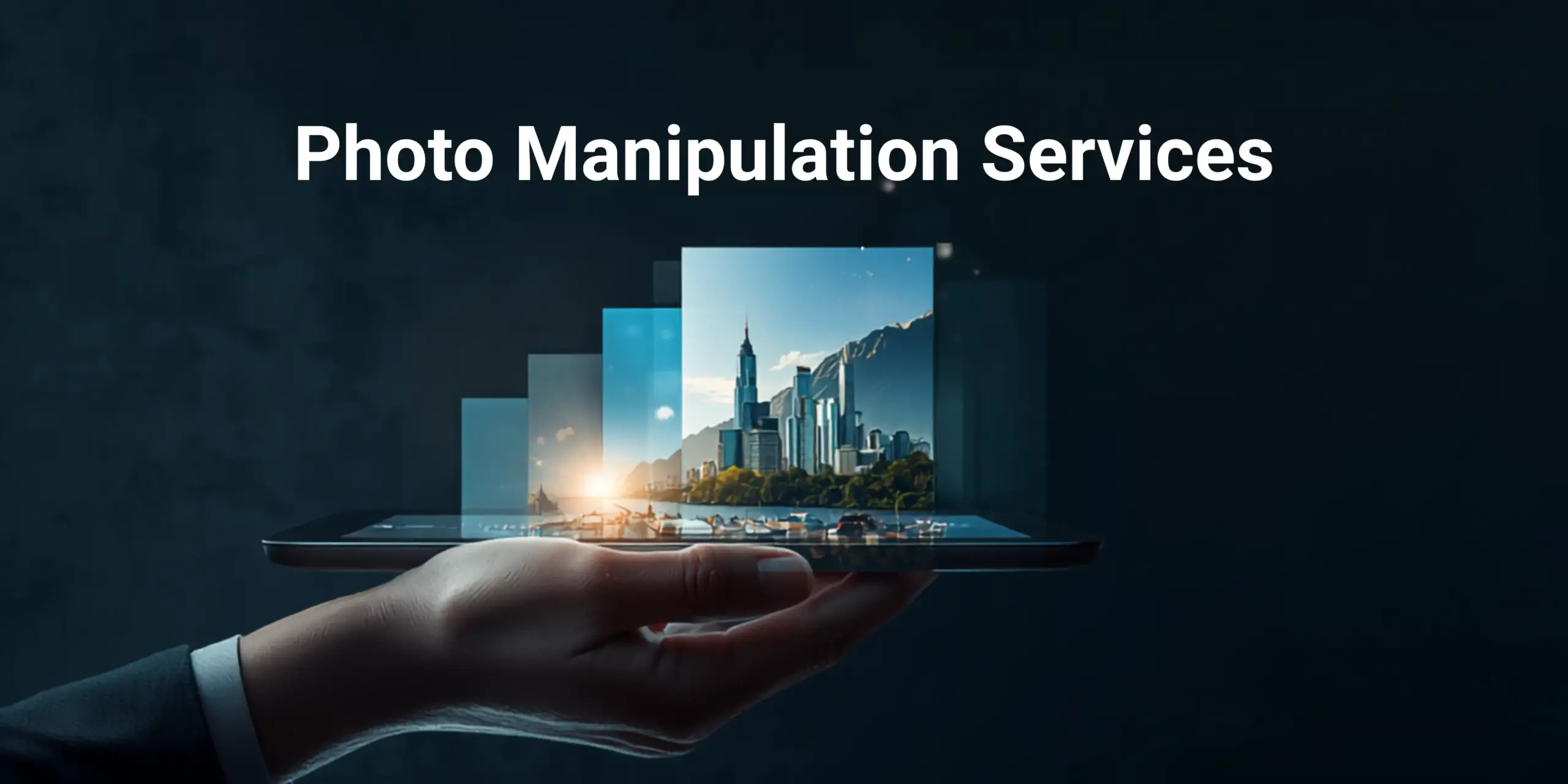
To create something that did not exist in-camera, photo manipulation combines, changes, or replaces parts across one or more photographs. It could entail producing a fully fantasy-based composite from many sources, putting a product on a background that was never photographed together, or substituting a stunning cloudscape for a flat sky.
Why the Distinction Matters
This distinction has an impact on budget, turnaround expectations, and workflow planning for commercial photographers and agencies. During a portrait session, a retouching pass is predictable. A fantasy editorial or a multi-element product composite calls for a particular degree of technical and creative work.
Manipulation creates; retouching maintains. Both are acceptable and frequently utilized, but the choice you make for your project will influence everything that comes after.
Background Replacement and Compositing
In practically every business, one of the most popular photo editing services is background replacement. It entails separating an image’s topic and setting it against a whole new background.
When Background Replacement Is the Right Choice
Commercial photographers take pictures of real estate, models, and objects in unreliable settings. Even while the studio lighting is great, the background could be uninteresting, uneven, or inappropriate for the finished product. This is resolved via background replacement, which involves precisely masking the subject and positioning it on any context, be it a living scene, a solid color, or a specially created setting.
This is a common tool used by advertising agencies. Without ever having to reshoot, a product that was taken in a controlled studio setting can be used in a kitchen, an outdoor market, a beach scene, or a branded digital setting.
For $1.50 to $4 per image, Photodotedit offers background replacement. All masking is done by hand using Photoshop tools to guarantee crisp borders, precise shadow handling, and color uniformity between subject and background.
Photo Compositing for Complex Scenes
Compared to background replacement, compositing is more advanced. Compositing creates a whole image from several photographic sources rather than just changing a background. A liquid pour, a glass, surface reflections, backdrop elements, and atmospheric lighting might all be included in a product composite for a beverage brand. Each of these components would be photographed or sourced independently before being combined into a single, unified image.
Since it is frequently difficult or too costly to get the ideal outcome totally in-camera, this is a routine procedure in advertising and commercial photography.
Color matching across all elements, consistent light direction, precise shadow and reflection production, and edge refinement at each layer boundary are important technical criteria for compositing. At this point, Photoshop techniques like masking, blending modes, adjustment layers, and color grading are all used.
Sky Replacement for Landscapes and Real Estate
One of the most frequent issues with outdoor photography is flat, cloudy skies. A drab, featureless sky can detract from a wonderfully lit landscape or a well-composed real estate façade by making the image seem boring.
Sky Replacement in Real Estate Photography
Without any control over the weather, real estate photographers frequently shoot at prearranged times. Sky replacement preserves all building elements while substituting a blue sky, golden hour light, or dramatic clouds for a flat white or cloudy sky.
Adding a fresh image is not the only problem in sky replacement. The replacement sky must match the subject’s light quality, color temperature, and shadow direction. Immediately, a building illuminated by chilly blue daylight behind a warm sunset sky seems out of place.
Expert editors make sure window reflections match the new sky, add suitable warm light to the facade, and alter the building’s overall color temperature. When done properly, sky replacement is undetectable. When done incorrectly, it’s one of the most noticeable photographic retouching errors.
Sky Replacement for Landscape and Commercial Photography
In addition to real estate, sky replacement is employed in outdoor lifestyle photography, landscape photography, and automotive advertising. As long as the end usage is obviously commercial or promotional rather than photojournalistic, it is a commonly accepted industry practice.
As part of its background replacement and expert styling services, Photodotedit takes care of sky replacement. To make sure the new sky matches the lighting conditions of the original photo, editors work with your exact specifications.
Object Removal and Cloning
Object removal is precisely what it sounds like: removing undesirable components from a picture and convincingly filling the void. The intricacy of the environment surrounding the deleted element determines the level of skill required.
Simple Object Removal
It is usually easy to remove a little object from a clean background, such as litter in a street scene or a price label on a product. Photoshop’s healing brush and content-aware fill effectively manage these situations by replacing the deleted area with a sample of the surrounding texture.
Complex Removal and Inpainting
The procedure becomes much more complicated when the object to be removed overlaps with intricate backdrops, architectural features, or another topic. It’s easy to remove a power line that crosses the sky. It is necessary to manually recreate everything the deleted element covered in order to remove a person from a bustling market scene where other subjects and background elements overlap.
For $2 to $5 per item, Photodotedit provides object substitution and removal. This can involve removing undesired items from product backdrops, deleting distracting foreground features, or removing strangers from group pictures.
Adding Objects and People
In reverse, the same skill set is applicable. If a significant person was absent from a group photo, they may be added by precisely matching the color, lighting, and shadow of a separately taken picture. Scenes can be enlarged, props that weren’t there during the initial shot can be added, and aspects can be added to products.
Exposure Blending and HDR Compositing
A single exposure cannot represent the dynamic range found in many shooting conditions. Common instances are bright windows against a dark interior, a landscape where the sky is three stops brighter than the foreground, or a real estate photo where the interior and external light cannot be matched in-camera.
What Exposure Blending Involves
Combining two or more images of the same scene taken at various exposures is known as exposure blending. Highlight details in the window or sky are preserved with a darker exposure. Shadow detail in the interior or foreground is preserved at a brighter exposure. Photoshop masks are used to combine the two, resulting in a final image with full-range, natural tonality.
In contrast, HDR processing compresses a large range into a single image via tone mapping, which frequently results in an unnatural or overly processed appearance. When done correctly, manual exposure mixing appears very natural.
When Exposure Blending Is Necessary
Exposure mixing is a major tool used by real estate photographers. At least two exposures are needed for an interior shot with windows visible: one for the interior and one for the outside view. Without mixing, the windows are either correct and the room is dark, or the room is adequately revealed, and the windows are entirely blown out.
The same method is used by architectural and commercial photographers. Editors with specialized knowledge in this workflow are best suited to handle this technically challenging process, which calls for exact masking and tonal matching between layers.
Fantasy and Creative Composite Photography
Photo manipulation fully enters the imaginative realm in creative compositing. This includes fine art photography that purposefully goes beyond what a camera can record, book cover art, editorial photos for magazine covers, and advertising campaigns that call for imaginative settings.
What Creative Compositing Can Achieve
Scenes that are completely unfeasible in reality can be created by a talented composer. It is possible to place figures in imaginary settings. A convincing scene can be created by combining lighting from various sources. It is possible to introduce objects, animals, or other creatures with believable scale and integration.
This type of photo modification requires the greatest amount of work. It calls for a solid technical understanding of Photoshop, a great sense of color and light theory, and a sincere creative vision. Every edge needs to be fine-tuned separately, shadows need to be created rather than merely moved, and each part needs to be color-graded to fit the overall scene.
The Creative Level manipulation in Photodotedit requires two or more hours of labor per image and is priced at custom rates. It works well for editorial projects, magazine publishing, advertising, and any other use where the image must convey a particular concept or feeling that photography cannot.
Applications in Commercial Photography
Creative composites for campaign imagery are often commissioned by advertising firms. This level of work is needed for an automobile placed in a dramatic landscape that doesn’t exist, a perfume bottle encircled by abstract visual elements, or a fashion editorial constructed over many environments.
Building these situations realistically on location is a far more costly and frequently impractical solution. In many situations, photo editing is not a quick fix. It is the planned technique of production.
Commercial Manipulation: Product Composites and Advertising
The majority of professional photo modification work is produced for advertising and product photography. Because the photos in this category must be commercially successful and go straight to consumers, the standards are high.
Product Compositing Standards
Even once it is fully formed, a product composite intended for commercial usage must appear absolutely natural. Shadows need to match the direction of the light precisely. On glossy surfaces, reflections have to make sense. The product and background must have the same color temperature. Before compositing starts, any flaws in the final output are fixed.
For e-commerce, this often means placing products on pure white backgrounds with consistent, soft shadows. In terms of advertising, this is incorporating goods into lifestyle scenarios that convey brand identity and aspirations.
Ghost Mannequin and Apparel Manipulation
Ghost mannequin compositing, in which clothing taken on a mannequin or model is altered to eliminate the mannequin and leave a three-dimensional, wearable-looking product image, is a common technique used in fashion and apparel photography. The fashion e-commerce business uses this particular and very challenging type of manipulation.
Consistency Across a Campaign
Dozens of product variations may be needed for a commercial campaign, all of which must be composed into the same background setting with uniform perspective, lighting, and shadows. Methodical methodology and editorial supervision at every stage are necessary to maintain such uniformity over a huge number of photographs.
Working with a specialised photo modification service like Photodotedit makes financial and practical sense in this situation. Editors follow your instructions, incorporate corrections, and maintain uniformity throughout a batch in a way that is difficult to accomplish when retouching is done on an as-needed basis by several people.
Ethical Boundaries in Photo Manipulation
In commercial, advertising, and creative photography, photo modification is commonly accepted. Additionally, it has actual duties, especially when persons are depicted.
Disclosure and Transparency
Regulators in many nations now mandate disclosure in advertising when photographs have been digitally manipulated to change the appearance of a person’s body. Depending on the market, campaigns involving body sculpting, skin modification that goes beyond realistic correction, or major changes to physical appearance could need to be labelled.
Commercial photographers and agencies should incorporate disclosure procedures into their workflow in accordance with the requirements that apply in their target markets.
Misleading Imagery in Commercial Contexts
In addition to legal constraints, there is a professional standard that prohibits manipulating a product in order to misrepresent it. Brands run the risk of losing consumers’ trust and facing legal repercussions if they display a food product in a condition that is more enticing than it actually is or if they change the product’s apparent size in relation to its surroundings.
In professional advertising photography, alteration is expected to present and enhance rather than deceive. Although this line depends on the situation, it is an important factor in commercial business.
Photojournalism and Documentary Standards
In photojournalistic and documentary contexts, photo tampering is completely unacceptable. It is unethical and unprofessional to alter news photos to manipulate what is shown. There is no commercial reason for these rules; they are absolute. This guide’s services and methods are exclusively meant for use in commercial, advertising, creative, and portrait photography settings.
Industry Standards: What Clients Need to Know
Knowing a few industry standards will help you accurately brief the work and confidently assess the results if you are contracting photo modification services for the first time.
Provide High-Resolution Source Files
The quality of the original photos determines how good a composite can be. Low-resolution JPEGs restrict the ultimate output size and make edge work challenging. The greatest flexibility is offered to editors when RAW or high-resolution TIFF files are provided. JPEG, RAW, PSD, PNG, CR2, TIFF, and other widely used image formats are supported by Photodotedit.
Be Specific About Deliverables
Inconsistent outcomes are produced by vague briefs. Indicate the image’s intended application, the background or setting you want, any reference photos that show the direction, and any particular technical specifications like output size or color profiles.
Revisions Are Normal
Revision rounds are part of professional photo modification services. Unlimited edits are offered at Photodotedit until the final product satisfies your style specifications. Instead of attempting to convey every detail up front, use this technique to adjust the editor’s work to your standards.
Turnaround Times
Photodotedit returns standard manipulation work in a few business days. It could take longer to complete complex creative composites that need two or more hours of editor time. At the brief stage, confirm turnaround expectations, especially if you have a campaign deadline to meet.
Photodotedit Photo Manipulation Services
Photodotedit offers expert photo editing services to marketing teams, advertising agencies, and commercial photographers worldwide. The entire spectrum of modification work is covered by the service, from straightforward item removal and background replacement to intricate commercial composites and imaginative editorial pictures.
Complexity shapes pricing. The cost of standard manipulation, which includes object removal, background replacement, and simple compositing, ranges from $3 to $5 per image. Advanced compositing, picture mixing, and stylization are examples of professional-level work that cost between $5 and $8 each image. Custom pricing is used for creative-level alteration that requires intricate scene construction and prolonged editor effort.
Before committing to a full order, new customers can submit sample photos for a free trial edit. This enables you to assess quality and set standards for style before assigning a volume job.
To begin, send your photos to [email protected] along with a brief explanation of the necessary manipulation, or get in touch with the team directly at [email protected]. Additionally, you can contact the crew via live chat on the Photodotedit website or by calling +91-8130136092.
What is the difference between photo manipulation and photo retouching?
Retouching is the process of improving or correcting a single image. Manipulation creates something that did not exist in-camera by combining, swapping out, or changing elements across photos. Manipulation techniques include object removal, compositing, and background replacement.
What types of images does photo manipulation work best for?
Photo manipulation is frequently used in commercial product photography, advertising images, real estate photography, editorial and magazine work, book covers, and innovative fine art photography. It works well in any situation when the objective is not a documentary record but rather a manufactured or improved picture.
How do I know if my project needs manipulation or retouching?
Manipulation occurs when you need to alter the background, the things in the frame, the sky, or the surroundings. Retouching is the process of making improvements to what is already present, such as skin, exposure, or color. Both are necessary for many undertakings.
Is sky replacement considered ethical in commercial photography?
Indeed. Sky replacement is commonly used in commercial, landscape, real estate, and advertising photography. In photojournalism or documentary work, where photos must accurately depict what was captured, it is inappropriate.
How long does professional photo manipulation take?
Compared to complicated compositing, standard backdrop replacement or object removal takes a lot less time. It can take up to two hours for each image in creative composites that require creating entire scenarios from many sources. The majority of typical work is returned by PhotoDotEdit in a few working days.
Does Photodotedit offer a free trial?
Indeed. New customers can submit photos for a free, no-obligation initial edit. Free changes are offered indefinitely till the outcome satisfies your needs.