
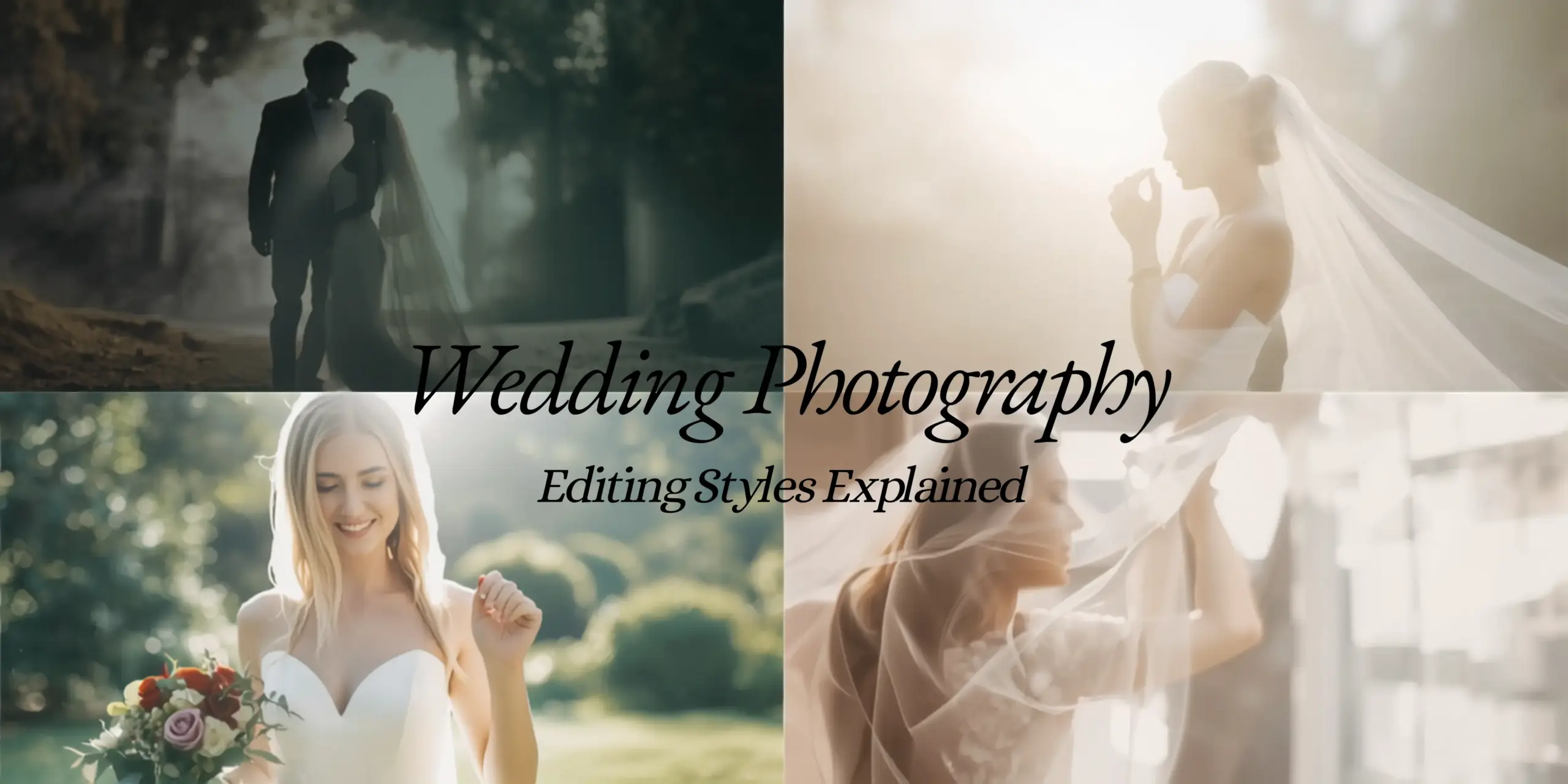
Your editing style is your signature. It’s what makes couples pick you above every other photographer in your market, and it’s what makes your portfolio instantly recognizable. Knowing the three main wedding picture editing styles (dark and moody, airy and bright, and film-inspired) creates a foundation from which to build a cohesive visual identity that will attract the correct clientele and deliver galleries they really love.
What Editing Style Means for a Wedding Photographer
Your editing style is not a filter or a preset. It’s a thought-out set of decisions on tone, colour, contrast and mood that you apply across the board to every single image in every gallery you give. A clear style helps you develop your brand, helps you set client expectations appropriately, and makes your post-production workflow a lot faster and repeatable.
Dark and Moody Wedding Photography
Dark and moody editing is characterised by deep shadows, high contrast, desaturated or muted tones and a theatrical, emotive feel to the graphics. Highlights pulled back, blacks crushed, flesh tones warm/cold as per artistic direction.
Techniques include reducing exposure, lifting shadows carefully, split toning with warm highlights and cool shadows, desaturating greens and oranges for a controlled, intentional palette. Perfect for golden hour photographs, candlelight dinners & intimate ceremony coverage.
Airy and Bright Wedding Photos
Airy and bright editing will provide you with light-filled, clean and romantic images with lifted shadows, smooth contrast and a warm, natural color palette. The whites are clean and not blown out, the skin tones are warm and healthy, and the overall feeling is fresh, happy and timeless.
Techniques include a slight rise in exposure, an increase in blacks, a decrease in contrast, a warming of the white balance and an increase in brightness in skin tones. This is a highly common design for outdoor ceremonies, garden weddings and places with wonderful natural light when the setting lends itself to the look.
Film-Inspired Wedding Editing
This is a film-inspired edit that attempts to simulate the organic, slightly imperfect look of analog photography. It is characterized by low blacks, soft texture, muted colours, a slight colour cast and a softness not naturally attained by digital camera technology.
Techniques such as elevating the black point to reduce the tone curve, adding grain (in Lightroom or Photoshop), adding subtle color casts to the shadows and lowering saturation levels in general can all be used to achieve a natural and timeless image. Couples love this approach because they want their photos to feel lived in and natural, not digitally polished.
How to Choose Your Signature Style
Choose a style that fits the type of weddings you shoot the most, the locations you work in and the clientele you want to attract. You don’t need to follow the most popular style. Consistency counts more. Find one very strong look and build your portfolio around that till it is readily identifiable.
Communicating Style to Clients and Editors
Use sample galleries, mood boards and style descriptors to communicate your style to each client effectively before booking. Work with a post-production partner and give sample edits, Lightroom presets and written comments that illustrate your personal approach to tone, contrast and color so every gallery comes back matching your signature look.
Let Photodotedit Handle Your Wedding Editing
Your style is the artwork you create. The real operational issue is doing that regularly, hundreds of photographs every wedding. Photodotedit offers expert wedding picture editing that matches the exact dark and moody, airy and bright or film-inspired style you have, and delivers a consistent, polished gallery in 24 to 48 hours. Try your first edit for free today.